Let’s get something straight right now: your AI assistant isn’t outsmarting you. You’re just exhausted, over-notified, and trying to remember if you already reheated your coffee or just imagined doing it. Again.
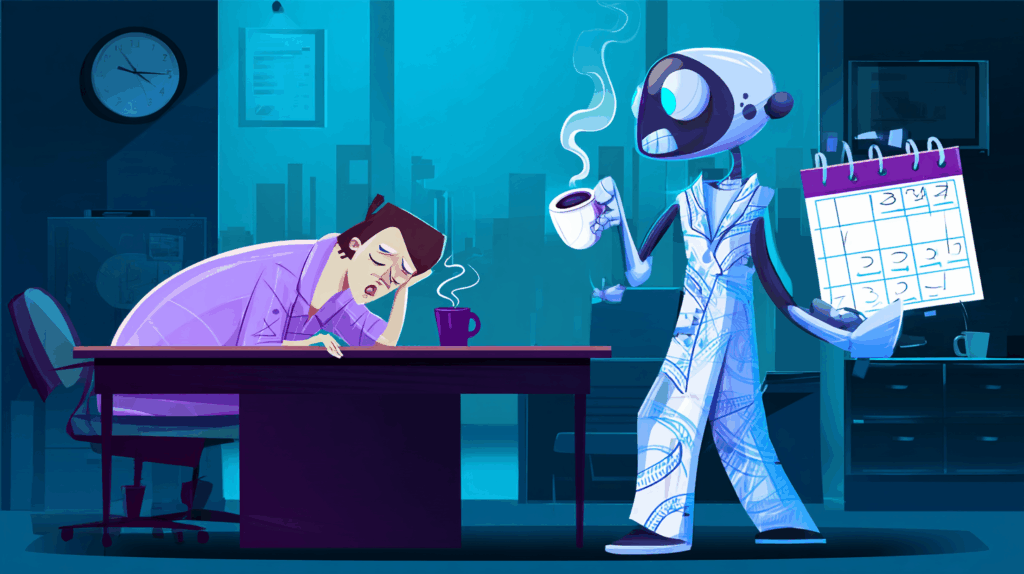
This whole idea that AI is suddenly “smarter than humans” is cute, really. Adorable, even. Because what we’re calling intelligence is often just cleverly disguised mental outsourcing. You didn’t forget your anniversary—you just handed that job to Google Calendar three years ago and never looked back.
We’re not evolving. We’re delegating. And delegation isn’t a sign of progress when you can’t spell your own email address without autofill.
The Rise of Cognitive Offloading (a.k.a. Brain Outsourcing)
Remember when you used to actually know phone numbers? Now your brain contains exactly two: your childhood landline and “Mom Cell.” The rest are safely stored inside a rectangular box you treat like a limb. That’s not AI replacing you. That’s you waving the white flag and saying, “Here, take it, I’m tired.”
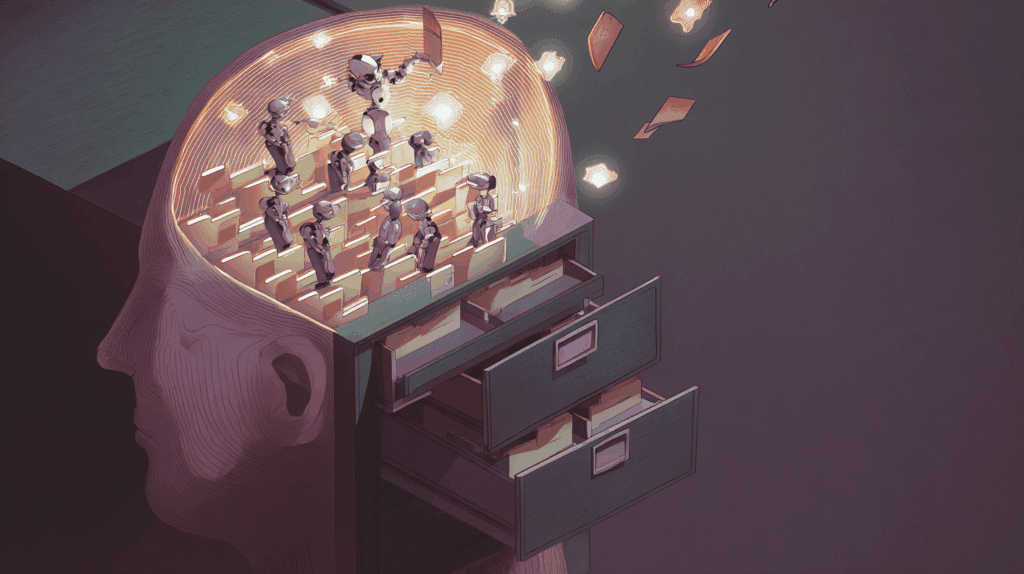
Cognitive offloading is the fancy term for letting machines do the thinking for you. It’s not new. We’ve been doing it since we invented Post-its. But now it comes with a voice interface and a smug confidence that makes it feel like the assistant is the boss.
Ask your chatbot a complex question and it spits out a polished paragraph in 2.4 seconds. Does that mean it’s smarter? No. It just never has to wonder what it walked into the kitchen for.
Efficiency or Erosion?
Sure, it’s efficient. But there’s a fine line between saving time and hollowing out your ability to think. If you ask AI to summarize your thoughts, organize your life, and generate your ideas… what’s left that’s actually you?
We pretend this is about “enhancing productivity.” But deep down, it’s often just a fancy way to say: “I don’t want to deal with this right now, so let the robot do it.”
The Illusion of Smart Tools
The worst part? These tools feel smart. They reflect back what you wanted to hear, cleaned up and bullet-pointed. They don’t push back. They don’t pause. They don’t say, “Wait, are you sure about that?”
They say, “Of course, here’s a ten-step plan for your half-baked idea,” and suddenly you’re halfway through launching an ill-advised side hustle based on a passing thought you had in the shower.
You’re Still in There Somewhere
Look, I’m not saying throw your devices in a lake (unless they deserve it). I’m saying maybe—just maybe—you don’t need to let automation become amnesia. AI can be a tool, but it’s not a substitute for having a thought and holding onto it long enough to do something real with it.
So next time your assistant reminds you to hydrate, ask yourself: who told it to care in the first place?
Spoiler: it was you.