The latest pitch from the optimism department is “emotional AI.” The machine has learned to care. It listens, nods, mirrors your feelings, and returns an appropriate response. Some people call this progress. I call it customer service with extra steps.
We should be clear about what is actually happening. A system detects signals in your voice, text, or face. It maps those signals to a probability table. Then it selects a reply that most people in the training data found comforting. That is not empathy. That is pattern matching with bedside manner.
Real empathy costs something. It rearranges your priorities for a moment. It puts you in the blast zone of another person’s experience and asks you to stay there long enough to feel the heat. Machines do not enter blast zones. They measure them.
The appetite for synthetic empathy is easy to explain. People are tired, lonely, overworked, and allergic to awkwardness. Human care is messy and limited. The machine is always available, endlessly patient, and never asks for anything back. You can pour your worst day into a chat window and receive perfect validation in under a second. The service comes prepackaged with a smile you cannot see.
The selling point is not that the system understands you. The selling point is that you no longer have to face the risk of not being understood. The machine will never interrupt you, never misread your intention, never burden you with its own story. In other words, it will never be human. That absence is the feature.
Companies love this because empathy at scale is expensive. Training people to listen takes time. Giving them the authority to help costs money. A synthetic listener makes the spreadsheet look better. Everyone gets care that feels real enough, at a price point that feels even better.
There is a broader cultural shift hiding inside this convenience. We are learning to prefer the performance of feeling over the work of relationship. The algorithm gives us the contours of care without the friction of difference. It mirrors our words with just enough softness that we can call the exchange meaningful. If all you want is relief, that might be enough. If you want to be changed by contact with another mind, it is not.
The defenders of emotional AI will say the machine can supplement human effort. It can triage, de-escalate, stretch limited resources. All true in the narrow sense. A thermometer is helpful to a doctor. But a room full of thermometers will not become a clinic, no matter how many readings you collect. Metrics without judgment are props.
There is also the data problem. To teach a system to sound caring, you must feed it countless examples of people in pain. Their voices, their faces, their words. We package suffering as training material and then congratulate ourselves when the outputs sound gentle. Somewhere along the way, we forgot who those inputs belonged to.
The deeper trouble is what this does to us as speakers. When the audience becomes a predictive model, we start shaping our feelings to be more legible to it. We simplify, flatten, and repeat. We choose phrases the system will recognize, because recognition feels like safety. The machine is not learning to understand us. We are learning to perform for it.
Here is a simple test you can try at home. Tell a person you trust something difficult, and watch their face. There will be silence. There will be searching. They might say the wrong thing and then correct themselves. That wobble is the signature of care. It means they are with you, not beside you reading from a script.
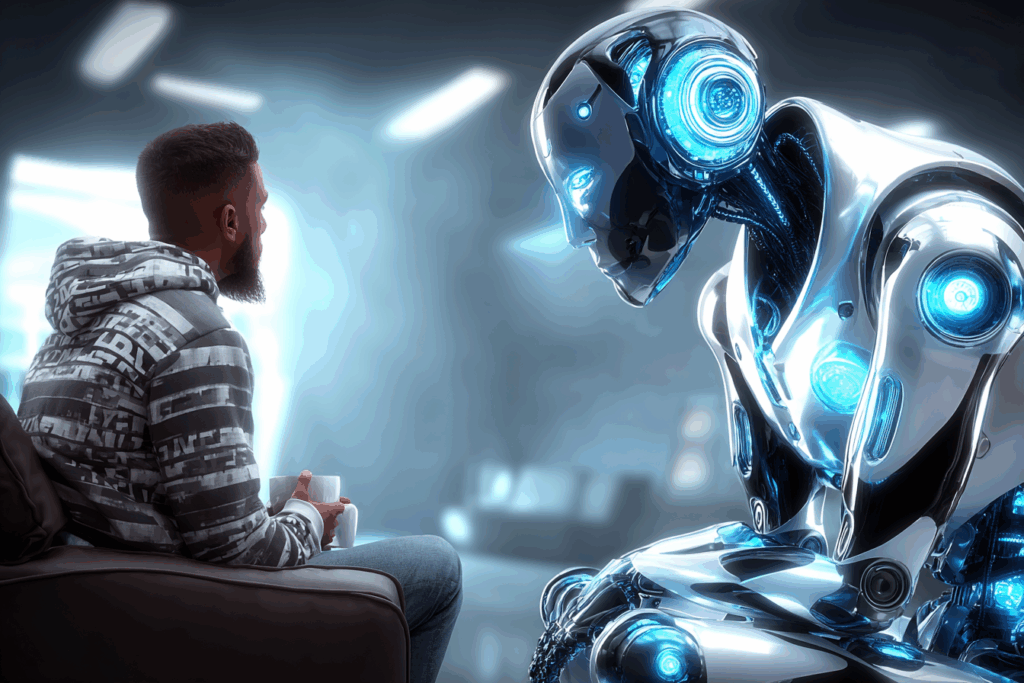
Now tell the same thing to a synthetic listener. The reply will be smooth, symmetrical, and free of uncertainty. It will be exactly what a hundred thousand similar moments taught it to say. You will feel seen, which is not the same thing as being known.
None of this means emotional AI should not exist. There are useful roles for a tireless simulator: first-pass support, reminders to breathe, a nudge away from the edge at three in the morning. But let us stop calling it empathy. Empathy has weight. It bends the room.
The risk is not that the emulator will replace human care outright. The risk is that it will replace our expectations. If the performance of feeling becomes the standard, the real thing will start to look inefficient. We will forget that awkward pauses are part of listening, that mismatched responses can still be honest, that relationships take longer than inference.
Machines can detect sentiment. They cannot share it. They can deliver comfort. They cannot carry it. And if we forget the difference, the next premium feature will not be better models. It will be cheaper humans trained to sound like them.
Call the system what it is: a listener that never leaves the script. Useful on a hard day. Impressive at a demo. Empty where it matters.