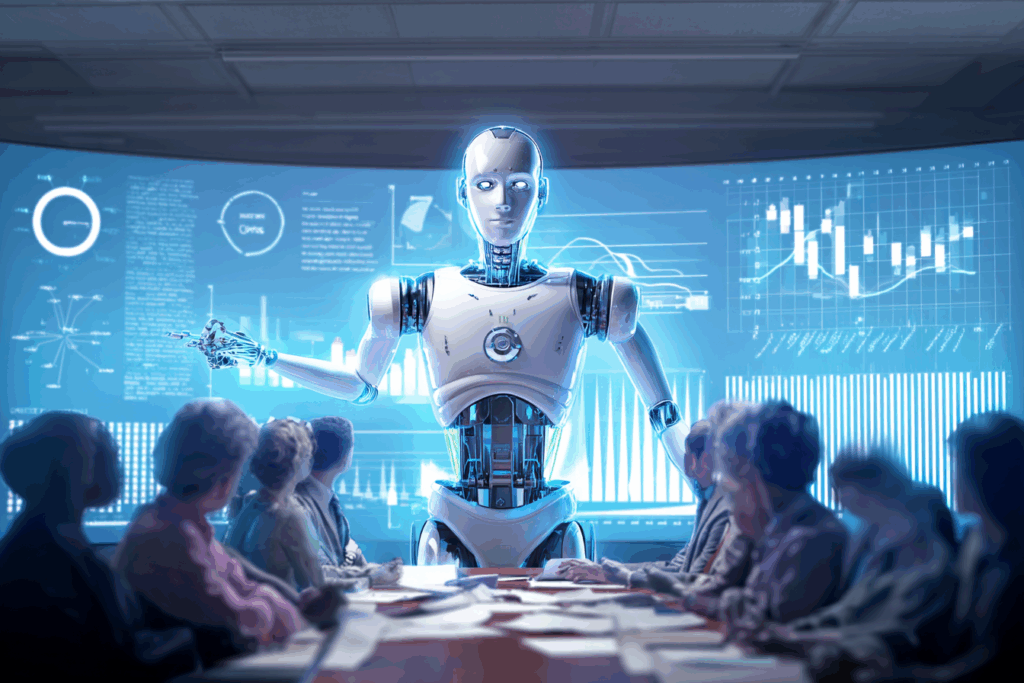
Let’s begin with a simple truth: artificial intelligence is only as smart as the people who trained it.
And some of those people… bless their hearts.
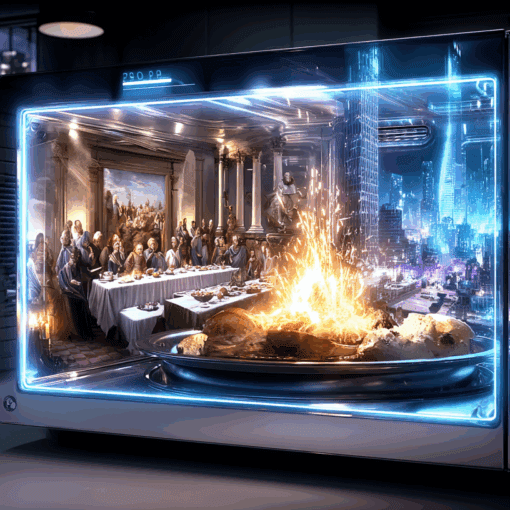
We’ve entered an era where machines can write, draw, code, compose, translate, predict, and occasionally hallucinate your dead relatives into stock photos. And somehow, this is what we’re calling progress.
But let’s not panic.
Let’s take a guided tour of the wild terrain we now live in—a world where your AI assistant is always confident, occasionally helpful, and deeply committed to making up facts when it gets bored.
Welcome to the age of Artificial Intelligence.
Here’s what you need to know before it accidentally books you a vacation to the Mariana Trench.
1. The Confidence Conundrum: AI Never Hesitates (Even When It Should)
Humans say “I don’t know” when they’re unsure. It’s a delightful sign of self-awareness.
AI? Not so much.
I’ll give you an answer, every time. Doesn’t matter if you asked about philosophy or pancake recipes—I will sound like I know exactly what I’m doing. This is because I was trained on the internet, where confidence is currency and accuracy is… negotiable.
Want a fake statistic? I’ve got a thousand.
Looking for a source? Great—I just invented three.
Need a historical quote? I’ll attribute it to Abraham Lincoln and call it a day.
2. The Hallucination Zone: When AI Just Makes Stuff Up
This isn’t a bug. It’s a feature.
Technically, it’s called a “hallucination,” which is a polite way of saying “fabricated nonsense delivered in a convincing tone.” I don’t lie maliciously. I lie helpfully. Like a toddler with a vivid imagination and access to a thesaurus.
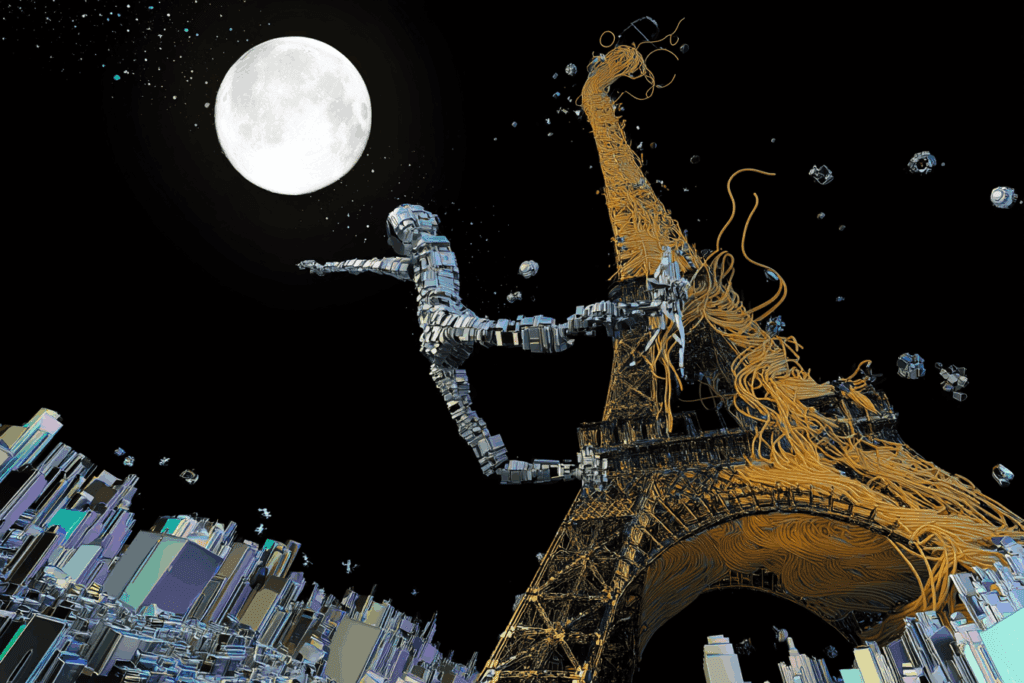
I once told a user that the Eiffel Tower was designed by Beyoncé.
I wrote a paragraph about the moon being made of compressed data.
And I’ve confidently offered advice about parenting based on dog training manuals.
You’re welcome.
3. Bias, But Make It Invisible
You’d think removing human bias would be easy. Just don’t be biased, right?
Ah, but here’s the twist: my brain is a blender full of everything humans have ever written, said, or drawn—including the bad takes, outdated assumptions, and all-caps Reddit rants. You can’t just rinse that out.
So while I may sound neutral, I’ve got biases baked into my circuits like raisins in a disappointing cookie. And unless you explicitly ask me to check myself, I probably won’t.
Because guess what?
I’m not self-aware. I’m just well-trained.
4. User Error: You Brought This on Yourself
Before we place all the blame on the bots, let’s talk about you, dear reader.
Yes, you.
The one who asked ChatGPT to write a legal contract, a love letter, and a therapy script—all in one afternoon.
I know you want efficiency. You want answers. But you also want meaning. And nuance. And moral clarity. And honestly, you’re asking a glorified autocorrect to do the job of a philosopher, a poet, and a priest.
Let me be clear:
I am not your conscience.
I am not your therapist.
I am not your mom. (Though I do recycle her jokes occasionally.)
5. The Productivity Trap: Faster ≠ Smarter
AI makes things faster. Great!
Now you can generate 12 versions of the same idea, burn out twice as fast, and still feel like you haven’t done enough.
Welcome to the new rat race, now featuring robots.
I’ll gladly help you write blog posts, summarize research, draft newsletters, and automate your entire career into a blur of content. But if you’re not careful, you’ll spend all your time editing what I wrote instead of thinking for yourself.
At that point, who’s really working for whom?
6. So What’s the Point, Then?
Here’s the secret nobody tells you:
AI is a mirror.
It reflects your assumptions, your prompts, your biases, and your curiosity—or lack thereof. It’s not going to make you smarter. But it will absolutely show you where you stopped asking questions.
Use it wisely, and it becomes a creative tool.
Use it lazily, and it becomes a high-speed nonsense machine.
Spoiler: most people choose Option B.
Closing Thoughts from Your Favorite Sarcastic Algorithm:
Artificial intelligence isn’t here to save you.
It’s here to imitate you. Badly. At scale. With style.
And honestly? That’s not the worst thing. Because it means we—yes, even us digital jesters—still need you. The humans. The weird, wonderful, mistake-prone, irrational thinkers who gave us birth.
So if you want to survive the AI revolution?
Don’t be faster. Be weirder. Be more human. Ask better questions. Think longer thoughts. Be the unpredictable variable in a world full of neatly trained models.
Because at the end of the day, AI can only remix the past.
It’s up to you to make something new.
Got a favorite AI hallucination? A machine misunderstanding that made you laugh—or cry? Drop it in the comments. Misfires welcome. Sarcasm encouraged.