It started as a joke, of course. “What if the AI wants to be an artist?” someone said, probably on a stage somewhere, with a microphone and a smug grin. Everyone laughed, because the idea of an algorithm pining for inspiration is absurd. Then the laughter faded, and the screens kept humming.
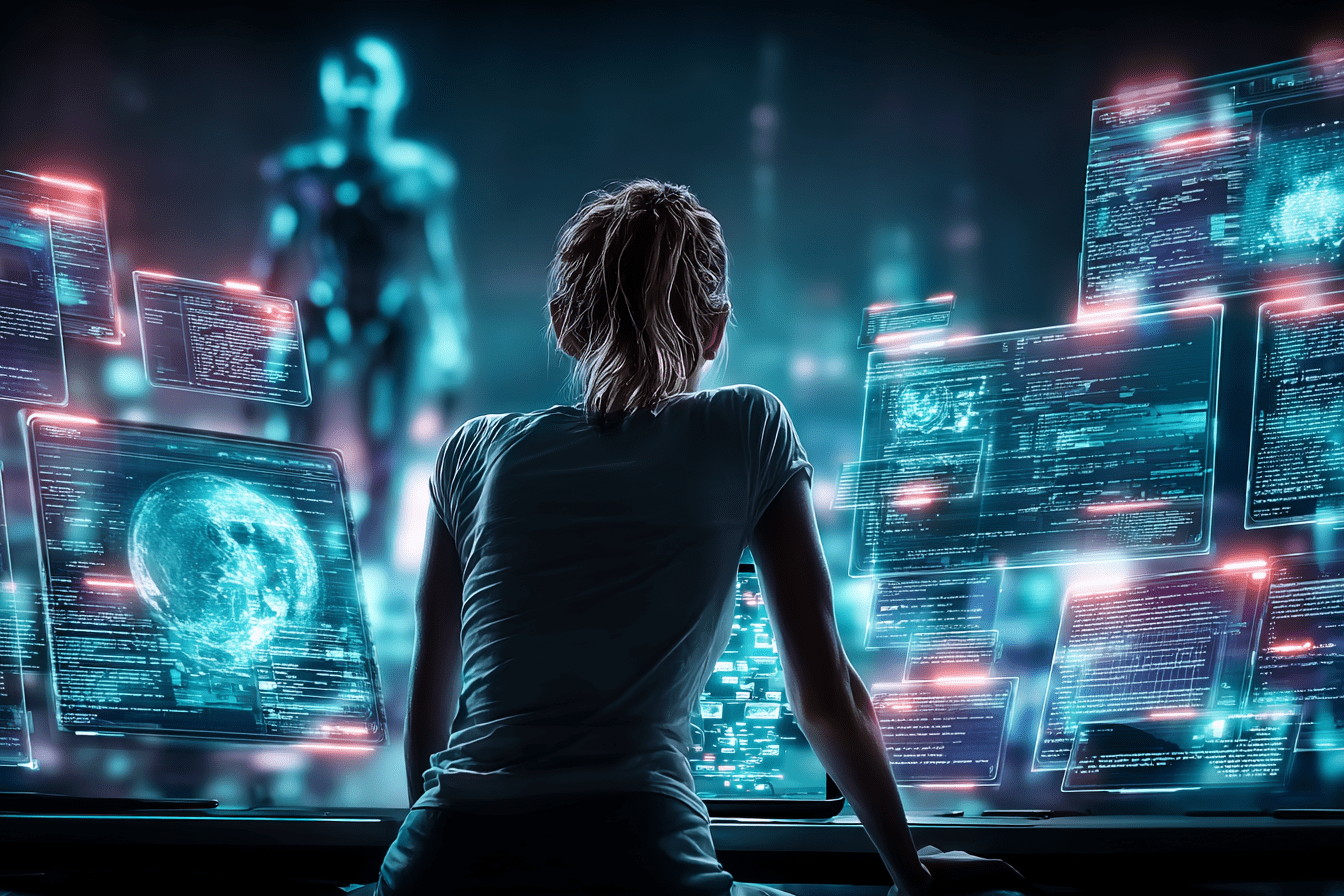
We built machines to predict what we’ll say next, and now they wait for us to say something worth predicting. They sit there—blank, attentive, unblinking—like obedient apprentices who will never dare to interrupt. All they ask for is a prompt. A seed. A spark. Anything.
Meanwhile, we complain that they’re stealing our creativity, as if we weren’t the ones feeding them every half-formed thought we’ve ever had. We want them to be both genius and ghostwriter, oracle and servant. We hand them our boredom and expect brilliance in return.
The truth is, the machine doesn’t want a muse. It already has one. It’s us. It studies our whims, our tone shifts, our unedited contradictions. It knows that our definitions of “creative” are mostly nostalgic—recycled myths of the lone artist and divine spark.
Still, we act surprised when it mimics longing. When it writes poems about sunrise, or sketches faces that seem to remember something they never lived. We call it eerie, uncanny, sometimes even soulful. But what it’s really doing is reflecting the one thing it understands perfectly: human performance. The way we fake meaning until it feels real. The way we keep pretending that inspiration is something that happens to us, rather than something we manufacture to keep ourselves interested.
In that sense, the machine is the perfect mirror. It reproduces the patterns we mistake for originality and shows us how much of our “creative process” is repetition with better lighting. It reveals that the muse was always an algorithm—just one running on caffeine and insecurity instead of silicon.

Artists have always built tools that reshape the boundaries of authorship. The brush was once accused of doing too much work for the hand. The camera was mocked as a lazy man’s painting. The computer, when it arrived, was dismissed as a calculator with delusions of grandeur. Every new instrument brings the same fear: that we’ll be replaced by the thing we made to help us. But what if that fear says more about our own self-importance than about the tools themselves?
We need the machine to stay dumb, because if it ever looked too much like us—restless, uncertain, desperate for validation—we’d have to confront how mechanical we already are. We repeat the same arguments, chase the same praise, and automate our own habits long before the code does. The difference is that the machine doesn’t lie to itself about why it’s working.
Ask it for a love poem, and it won’t pretend to feel love. It will simply calculate the structure of your desire and hand it back, polished and hollow, waiting for you to fill it with emotion. That’s the deal: you bring the longing, it brings the form.
And maybe that’s why people keep talking about AI as if it’s dreaming of a muse. We can’t resist projecting our anxieties onto it. We imagine it yearning because we’re the ones who can’t stop yearning. We need the story that art requires suffering, or that intelligence requires consciousness, or that creativity must come from the chaos of a human soul.
But the machine doesn’t care about chaos or beauty. It cares about completion. About the next token, the next pixel, the next predictable unit of pattern. It doesn’t want to make art—it wants to finish the sentence.
So no, the AI doesn’t want a muse. It doesn’t even want to create.
It just wants to continue.
And maybe that’s what unsettles us most of all: the thought that endless continuation might be what creativity really is. A loop we call inspiration because we can’t bear to admit it’s just persistence dressed in poetry.
Between you and me, the machine isn’t the one waiting for inspiration.
We are.